Pain after back surgery · Metro East
In failed back surgery syndrome, the operation fixed the structure it was aimed at. Nothing in the operation was aimed at why that structure failed.
Persistent pain after spine surgery is usually not a surgical error. It is a pain source that was never the disc. Or a nerve that was hurt before the operation could help it. Or the metabolic terrain nobody operated on. Each one can be tested.
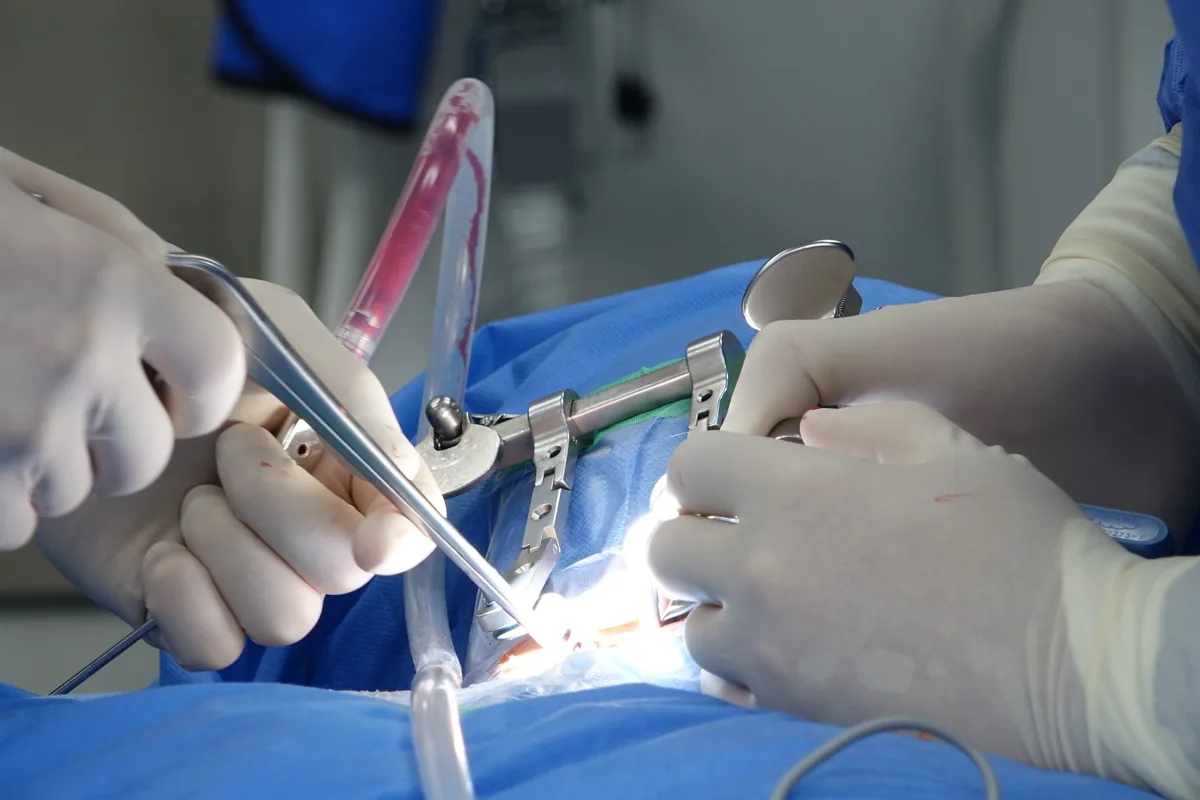
What is failed back surgery syndrome?
Failed back surgery syndrome is a label for a person, not a finding about an operation. In the literature it simply means spinal pain of unknown origin that stays or comes back after surgery in the same region. A review of how common it is puts the figure somewhere between one in ten and four in ten lumbar operations. That depends on the operation and the definition. The same review is explicit that most cases are not technical failures. The surgeon freed the nerve or fused the segment they set out to. What the name hides is this: the operation answered a structural question, and the pain was asking a different one.
That matters because it changes the next step. If the surgery was right and the pain has another source, the answer is to find the source. That is a diagnostic sequence, not a second operation.
Why does my back still hurt after surgery?
The first is the nerve itself. Picture a root that was pinched and inflamed for a year before it was freed. It has been rebuilt. Its sodium channels have multiplied. The spinal cord segment it reports to has been sensitized. The wiring keeps firing after the pressure is gone. Scar around the root after surgery can add a mechanical tether. This is neuropathic pain (pain from the nerve itself). It runs down the leg in the same path as before. It does not respond to more decompression, because there is nothing left to decompress.
The second is a new pain source, or an old one that was never the disc. A fusion takes motion away from one segment. It hands that motion to the facet joints above and below, and to the sacroiliac joint. Those joints now absorb what the fused segment used to. Back pain that shows up a year after a fusion and does not run down the leg is usually one of these. Neither shows on the post-operative MRI as anything a surgeon would act on.
The third is the terrain, and it is the one nobody operated on. A national surgical registry analysis looked at elective lumbar fusion. Patients with insulin-dependent diabetes had substantially higher complication rates than those without. Think of a disc that herniated at forty-five in a person with a high fasting insulin. It herniated in tissue whose collagen was already glycated (stiffened by sugar). Its tiny blood vessels were already impaired. Sleep loss lowers the pain threshold. Months of opioids after surgery can leave the nervous system more sensitive to pain than before. And the economics: a warehouse job that cannot be modified, a claim that pays for the operation and argues about the rehabilitation. None of that was in the operative field.
BACK TO THE SURGEON OR THE EMERGENCY ROOM FIRST
Fever, or fluid or redness at the incision, at any point after surgery. Weakness in a leg that is new or getting worse. Numbness in the saddle area, or any change in bladder or bowel control. A sudden new pain after a fall or a lift, in a spine with hardware. Pain that is now constant and does not change with position. Take these to the operating surgeon or the emergency department before you bring them to us. This page says which.
How do you find the cause of pain after back surgery?
- The operative report and the current imaging, read together. This confirms the hardware is where it should be and that there is no new stenosis at the next level.
- An examination that maps leg pain against the root that was operated on. It also tests the facet and sacroiliac joints that took on the load.
- Bloodwork: A1C, fasting insulin, lipids, vitamin D, and where the story fits, inflammatory markers.
- A diagnostic block aimed at the leading suspect. That is a medial branch block for the facets or an anesthetic injection for the sacroiliac joint. The pain is scored before and after. Here is how that result is read.
- A plan for the structure the block named, and a separate plan for the terrain, started the same week.
How is failed back surgery syndrome treated?
FOR THE STRUCTURE
Confirmed facet pain above a fusion goes to radiofrequency ablation. A confirmed sacroiliac source goes to its own injection and, where it holds, its own ablation. Leftover radicular pain (pain down the nerve) with scar around the root can be reached with an epidural through the caudal route. That route enters below the surgical field. None of these needs sedation; you drive yourself home and are back to normal activity within two to four hours.
FOR THE NERVE THAT WILL NOT STOP
Neuropathic leg pain after surgery is the condition spinal cord stimulation has its strongest evidence in. One randomized trial took 100 patients with failed back surgery syndrome and mostly leg pain. About half of those given stimulation had at least 50 percent relief at six months. Fewer than one in ten on medical management alone did. An earlier randomized trial found stimulation beat a repeat operation. Patients who crossed from reoperation to stimulation did better than the reverse. Later, high-frequency stimulation roughly doubled the responder rate of the older devices at three months, in a trial of 198 patients. It is trialed for a week before anything is implanted. The implant can be done in a hospital setting, including on the Illinois side at Anderson Hospital in Maryville, where Dr. Gurpreet Singh Padda, MD, MBA, MHP holds full privileges.
FOR THE TERRAIN
Insulin resistance is treated because it slowed the healing and is still stiffening the collagen. Acellular carbohydrates and industrial seed oils come out. Walking and graded loading come in. Sleep is protected because it resets the pain threshold every night. Opioids, where they are still on board, are tapered under cover of the procedures above. The goal is stated plainly: the lowest dose that lets you function, and for many people none. Acceptance and Commitment Therapy is given in-house by a licensed, pain-trained behavioral clinician, because after a surgery that did not deliver what was promised the most predictable outcome is a person who stops moving. That is 40 to 50 percent of the protocol here, and it starts the first week.
Can I choose my own doctor on an Illinois workers’ comp claim after back surgery?
Many post-surgical patients from Belleville and Edwardsville come with a workers’ compensation file that paid for the operation. Illinois claims are administered by the Illinois Workers’ Compensation Commission, and an injured worker may generally choose their own physician within the two-choice rule in 820 ILCS 305/8(a) unless the employer has an approved preferred provider program; a case-specific question belongs with an attorney or the IWCC. What we add is a record: which structure the block pointed to, what was done and what it produced. This page describes how it is built. The drive from either town is about 40 minutes without traffic. Follow-up after the diagnostic phase can run by telehealth where clinically appropriate.
Frequently asked questions
Do I need a referral after a failed back surgery?
No. You can book directly, and your surgeon does not have to send you. Some insurance plans still want a referral on file before they pay, so check your plan. Bring the operative report and any scans since the surgery; the first-visit guide for Illinois patients lists the rest.
Does this mean my surgeon did something wrong?
Usually it means the operation solved the problem it could see, and the pain had another source. That is common enough that the label exists. The way to find out is a diagnostic block, not a second opinion on the operative report alone.
Can I have injections with hardware in my spine?
Rods and screws change the approach, not whether it can be done. The facet joints above a fusion, the sacroiliac joint and the caudal epidural space are all reachable under fluoroscopy (live X-ray). The epidural page explains the route used in an operated spine.
Is a spinal cord stimulator my only option if the injections stop working?
It is the option with the strongest trial evidence for leg pain after surgery. It is tested for a week before any decision. This page covers what diminishing returns from injections mean and what else the plan holds.
Why does a pain clinic care about my blood sugar after a back operation?
Because insulin resistance slows the healing the operation depended on. It also keeps stiffening the collagen in every disc and joint that is left. This article explains what is drawn and why.
How common is failed back surgery syndrome?
Common enough to have its own name. A review of the research puts it somewhere between one in ten and four in ten lumbar operations. That depends on the operation and how the condition is defined. The same review is clear that most cases are not technical failures. The surgeon did what they set out to do, and the pain had a different source.
Should I have another back surgery?
Not before the source is found. When the first operation was technically right, the next step is a diagnostic sequence, not a second operation. In an earlier randomized trial, spinal cord stimulation did better than a repeat operation. There are exceptions: new leg weakness, fever, bladder or bowel changes, or a new injury in a spine with hardware go back to the surgeon first.
How do you live with failed back surgery syndrome?
By treating more than the spine. Insulin resistance is treated because it slowed the healing. Walking and graded loading come in, sleep is protected, and opioids are tapered under cover of the procedures. Acceptance and Commitment Therapy, given in-house, is part of the plan from the start, because after a surgery that did not deliver, the most predictable outcome is a person who stops moving. That work starts the first week.
Related reading
- Spinal cord stimulation
- Facet joint pain
- Sacroiliac joint pain
- When injections stop working
- Opioid stewardship
Sources
- Thomson S. Failed back surgery syndrome: definition, epidemiology and demographics. British Journal of Pain, 2013. PubMed 26516498
- Chan CW, Peng P. Failed back surgery syndrome. Pain Medicine, 2011. PubMed 21463472
- North RB et al. Spinal cord stimulation versus repeated lumbosacral spine surgery for chronic pain: a randomized, controlled trial. Neurosurgery, 2005. PubMed 15617591
- Kumar K et al. Spinal cord stimulation versus conventional medical management for neuropathic pain: a multicentre randomised controlled trial in patients with failed back surgery syndrome. Pain, 2007. PubMed 17845835
- Kapural L et al. Novel 10-kHz High-frequency Therapy (HF10 Therapy) Is Superior to Traditional Low-frequency Spinal Cord Stimulation for the Treatment of Chronic Back and Leg Pain: The SENZA-RCT Randomized Controlled Trial. Anesthesiology, 2015. PubMed 26218762
- Golinvaux NS et al. Complication rates following elective lumbar fusion in patients with diabetes: insulin dependence makes the difference. Spine, 2014. PubMed 25010098
We will find the source before we treat it, and we will tell you if the source is surgical
You will hear which structure the block implicated, what the bloodwork says about the terrain, and what each part of the plan is for. If the honest answer is that you need to go back to your surgeon, that is what you will be told.
505 Buckeye Dr, Suite 200
Troy, IL 62294
Procedure clinic: 4499 Woodson Rd, St. Louis, MO 63134, off I-70 next to St. Louis Lambert International Airport. One bridge from the Metro East.