Metabolic health and chronic pain
Fewer than one in a hundred of our chronic pain patients is metabolically healthy. That number explains more of your pain than your MRI does.
Metabolic inflammation keeps injured tissue in a repair that never finishes. It is why a disc that should have settled has not. It is why we draw blood at a spine visit.
How many adults are metabolically healthy?
under 7%
of American adults met the stricter cardiometabolic definition of health applied to NHANES data since 2021. A decade earlier, on NHANES 2009–2016, the share was already under 12.2%. The country roughly halved its healthy minority in ten years. Inside this practice the proportion is under 3% of all patients and under 1% of those with chronic pain, and those two are practice-reported figures from our own population, not trial outcomes, and individual results vary.
Those numbers are the reason this page exists. Say more than nine in ten adults walking into any clinic carry some mix of high fasting insulin, high triglycerides, low HDL, a wide waist or raised blood pressure. Then the average pain patient is not a healthy person with a bad disc. They are a person whose tissue is asked to heal inside a body that is chemically arguing against healing. The disc is where it hurts. It is not why it keeps hurting.
How does insulin resistance cause back pain?
Start with the meal, not the spine. Acellular carbohydrate is the refined flour and sugar that make up most of what a drive-through on Route 159 sells at eleven at night. It hits the blood faster than muscle can take it up. Insulin rises to push it into storage. Do that every shift for a decade and the cells stop listening. Insulin stays high to get the same job done. High insulin is not a quiet state. Fat tissue under that pressure acts like an endocrine (hormone-making) organ. It releases interleukin-6 and tumor necrosis factor into the blood. The immune cells that live inside fat switch to an inflammatory program. Hotamisligil named this metabolic inflammation in 2006. It is the terrain every injury lands on.
Now the spine. A herniated disc irritates a nerve root chemically as well as mechanically. The size of that chemical response depends on the inflammatory baseline it starts from. Glycation (sugar bonding to protein) stiffens the collagen of the annulus and the facet capsule, so tissue that should flex tears instead. The small vessels feeding the disc endplate and the nerve root narrow. It is the same process that narrows them in the retina (the back of the eye) and the kidney. A nerve with a poor blood supply heals slowly and fires easily. In a meta-analysis of the obesity and low back pain research, obesity raised the odds of seeking care for back pain and of chronic back pain in the general population. A systematic review of diabetes and spinal pain found the association held for both neck and back. A 2026 analysis of the US NHANES and Chinese CHARLS cohorts found that metabolic health predicted chronic pain even in adults who were not obese. That is the point. The weight is a symptom of the terrain, and the terrain is what hurts.
The third driver is not biological. It is the schedule and the food supply. Think of rotating shifts at the Granite City steel works and the refinery corridor through Wood River. Think of overnight picking in the warehouses around Edwardsville, and the base at Shiloh. They all run on cheap engineered calories eaten at the wrong hour under fluorescent light. We subsidize the crop that raises the insulin, and then we medicate the disc. A page that explains sciatica only as mechanics has left out the part that decides whether it heals.
He told people their A1C was not too bad
For twenty years Dr. Gurpreet Singh Padda, MD, MBA, MHP looked at a hemoglobin A1C of 5.9 and said what he was trained to say: not diabetic, nothing to do yet. He was measuring the wrong end of the process. Fasting insulin had usually been high for a decade before the A1C moved at all. The pain those patients came in with was the inflammation that high insulin had been driving the whole time. The correction was to stop waiting for the diagnosis that arrives last. It was to start measuring the one that arrives first.
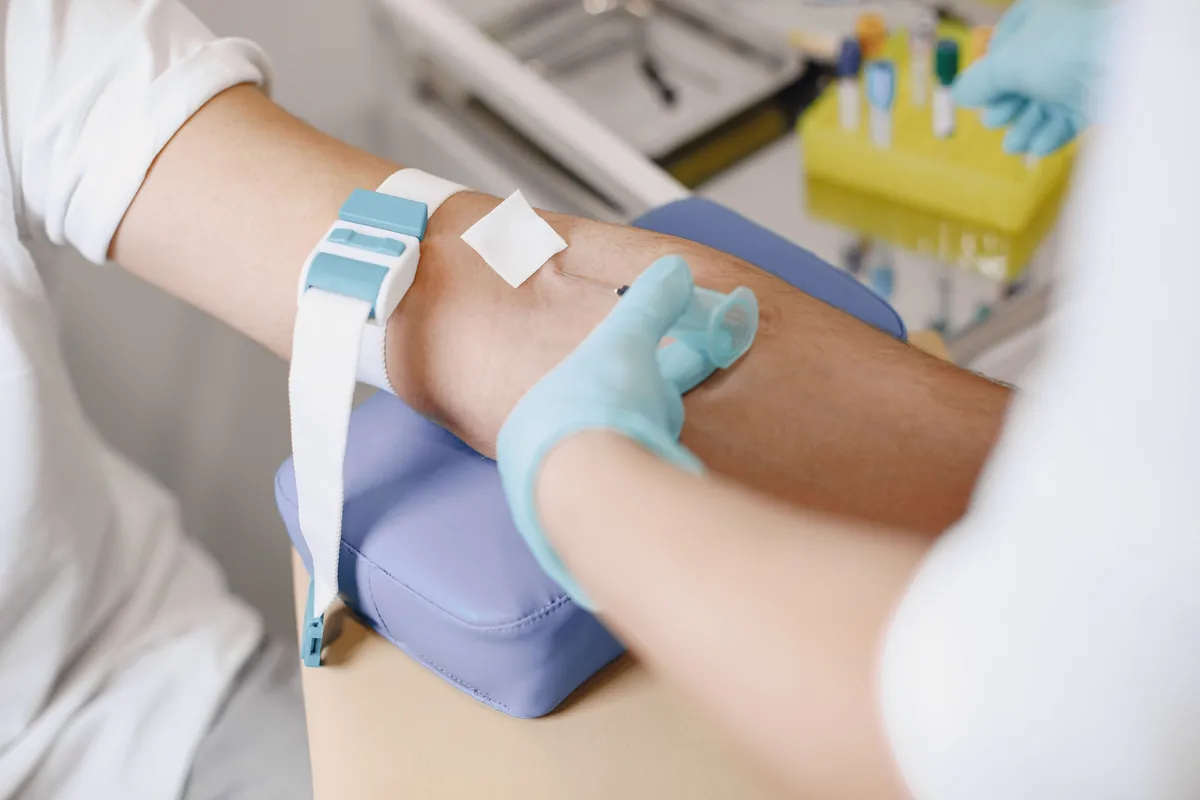
What blood tests does a pain clinic order, and why?
- Fasting insulin and glucose, and the ratio between them. That is because insulin resistance shows up years before glucose rises.
- Hemoglobin A1C, the three-month average. We need it because a steroid injection pushes glucose up for days, so we must know the starting point.
- Triglyceride-to-HDL ratio, a cheap stand-in for insulin resistance. A standard lipid panel already contains it.
- High-sensitivity C-reactive protein, the inflammatory baseline. A local anti-inflammatory has to push against it.
- Vitamin D, uric acid and thyroid function. We check them because each one changes pain thresholds and tissue repair in ways that look like a spine problem and are not.
These are ordered as part of the consultation. They are not a separate program offered to you later. If your Illinois primary care physician already has them, bring the printout. We will use it instead of repeating it.
What do the blood tests usually show?
INSULIN RESISTANCE WITHOUT A DIAGNOSIS
The most common result in this population is a normal glucose sitting on top of a fasting insulin two or three times what it should be. Nobody has named it, because nothing has crossed a diagnostic line yet. In pain terms it has crossed the line already. It is the reason the joint stays swollen and the reason the last injection faded.
NORMAL LABS, ABNORMAL PAIN
A minority of patients are metabolically clean. For them the plan leans harder on the mechanical and neurological diagnosis. That is useful to know early. It also removes an excuse. The pain is not being fed from the bloodstream, so the structure has to be found.
AN A1C IN THE DIABETIC RANGE YOU DID NOT KNOW ABOUT
It happens at this clinic more often than anyone would like. A steroid injection in that setting can send glucose to a level that is a medical problem in its own right. So the procedure waits. Your Illinois physician gets a call the same day. The plan changes before the needle does.
How is metabolic inflammation treated alongside the pain?
The injection does not go away. It gets used correctly, as a window and not a repair, and the window gets filled. Time-restricted eating and enough protein lower the insulin that drives the inflammation. They are prescribed with a start time that fits the shift, not a textbook. Morning light after a night rotation resets the cortisol rhythm that sleep loss has flattened. A daily walking dose loads the cartilage and disc. Movement feeds them and sitting starves them, including the forty minutes each way on I-270 or across the Poplar Street Bridge. We keep muscle because it is the body’s largest sink for glucose, and losing it makes the terrain worse. Acceptance and Commitment Therapy runs in-house with a licensed, pain-trained behavioral clinician. That is because the choices above are made under stress, and stress is a metabolic state as much as an emotional one.
This is forty to fifty percent of the plan, with a body-based reason attached to every part of it. It is not the aftercare. It is the treatment the procedure makes possible. It is the part that decides whether the relief holds.
Frequently asked questions
Why does a pain clinic order bloodwork?
A steroid injection raises glucose for days. Insulin resistance slows every tissue we are trying to help heal. So the numbers are a safety check and a diagnosis at once, as explained in why we check your blood sugar.
Can insulin resistance cause back pain without diabetes?
Metabolic health predicted chronic pain in non-obese adults in the NHANES and CHARLS cohorts. Glycated collagen and inflamed nerve roots do not wait for a diabetes diagnosis. That is why a herniated disc heals differently in different bodies.
Will a steroid injection raise my blood sugar?
For several days in most patients, and substantially in diabetics. That is why the plan on the epidural steroid injection page includes knowing your numbers first.
Does losing weight fix the pain?
Lowering insulin fixes more of it than lowering weight does. The schedule, sleep and movement changes that do that are laid out on the sleep, movement and behavior page.
Is peripheral neuropathy a metabolic problem?
In most cases seen here, it is the small vessels and the nerve metabolism failing under high glucose and insulin. The peripheral neuropathy page covers what can be done at the nerve and what has to be done in the bloodstream.
What are the first signs of insulin resistance?
Usually a lab value, not a symptom. Fasting insulin rises years before blood sugar does. So the most common finding here is a normal glucose sitting on top of a fasting insulin two or three times what it should be. A high triglyceride-to-HDL ratio on a standard lipid panel points the same way. In pain terms, it shows up as a joint that stays swollen or an injection that fades early.
What is the A1C level for insulin resistance?
There is no A1C that rules it out. A1C is a three-month average of blood sugar, and it is the last number to move. For twenty years Dr. Padda told patients an A1C of 5.9 was not diabetic and needed nothing, while their fasting insulin had often been high for a decade. That is why this practice measures fasting insulin and glucose together instead of waiting on A1C.
How do you fix insulin resistance?
By lowering the insulin that drives it. The plan here uses time-restricted eating and enough protein, timed to fit your shift. It uses morning light after a night rotation and a daily walking dose. And it keeps muscle, the body’s largest sink for glucose. Acceptance and Commitment Therapy with a pain-trained behavioral clinician is part of it, because these choices are made under stress. This work is forty to fifty percent of the treatment plan.
Related reading
- Sleep, movement and behavior
- When injections stop working
- Peripheral neuropathy
- Knee pain
- Opioid stewardship
- Why a pain clinic checks your blood sugar
We will measure the terrain before we treat the structure
Bloodwork is part of the first consultation, the results are explained in plain language, and your Illinois physician gets a copy. If the numbers change what is safe to inject, you will hear that before anything is scheduled.
505 Buckeye Dr, Suite 200
Troy, IL 62294
Procedure clinic: 4499 Woodson Rd, St. Louis, MO 63134, off I-70 next to St. Louis Lambert International Airport. One bridge from the Metro East.
Sources
- O’Hearn M et al. Trends and Disparities in Cardiometabolic Health Among U.S. Adults, 1999-2018. Journal of the American College of Cardiology, 2022. PubMed 35798448
- Araújo J et al. Prevalence of Optimal Metabolic Health in American Adults: National Health and Nutrition Examination Survey 2009-2016. Metabolic syndrome and related disorders, 2019. PubMed 30484738
- Li Z et al. Metabolic Health is Highly Predictive of Chronic Pain Among Non-Obese Adults: Evidence from the NHANES and CHARLS Studies. Pain Management Nursing, 2026. PubMed 42191513
- Hotamisligil GS et al. Inflammation and metabolic disorders. Nature, 2006. PubMed 17167474
- Shiri R et al. The association between obesity and low back pain: a meta-analysis. American journal of epidemiology, 2010. PubMed 20007994
- Pozzobon D et al. Is there an association between diabetes and neck and back pain? A systematic review with meta-analyses. PLoS One, 2019. PubMed 30789940