Ketamine for CRPS · Metro East IL
Ketamine for CRPS is usually a tablet under the tongue or a nasal spray, not an IV chair. That changes who can actually get it.
Ketamine blocks the NMDA receptor that keeps complex regional pain syndrome amplified. Here most patients take it under the tongue or as a nasal spray. It also comes as a compounded cream for skin-level allodynia (pain from light touch), and by infusion when nothing else fits.
How does ketamine help CRPS?
Complex regional pain syndrome (CRPS), the condition formerly called reflex sympathetic dystrophy (RSD), is what happens when a limb’s injury heals and the nervous system refuses to file the report. Repeated pain signals from the injured limb open NMDA receptors on the relay cells of the spinal cord. Once those channels are open, the cells fire harder to less input. This is called wind-up. The cord’s support cells, the glia, switch on. They pour out inflammatory chemicals that keep the channels open. Ketamine is the strongest NMDA blocker in safe medical use. That is why it is one of the few drugs aimed at the amplifier, not the limb.
Two biological drivers keep the amplifier running. One is the receptor biology above. The other is the limb’s own inflammation and sympathetic overdrive, feeding it fresh input. The third is social. A limb that cannot bear a bedsheet cannot bear a partner’s hand either. The job ends. And a person alone with a burning arm has a nervous system with nothing to do but listen to it. Ketamine turns the volume down; the plan fills the quiet.
How is ketamine given for CRPS?
SUBLINGUAL
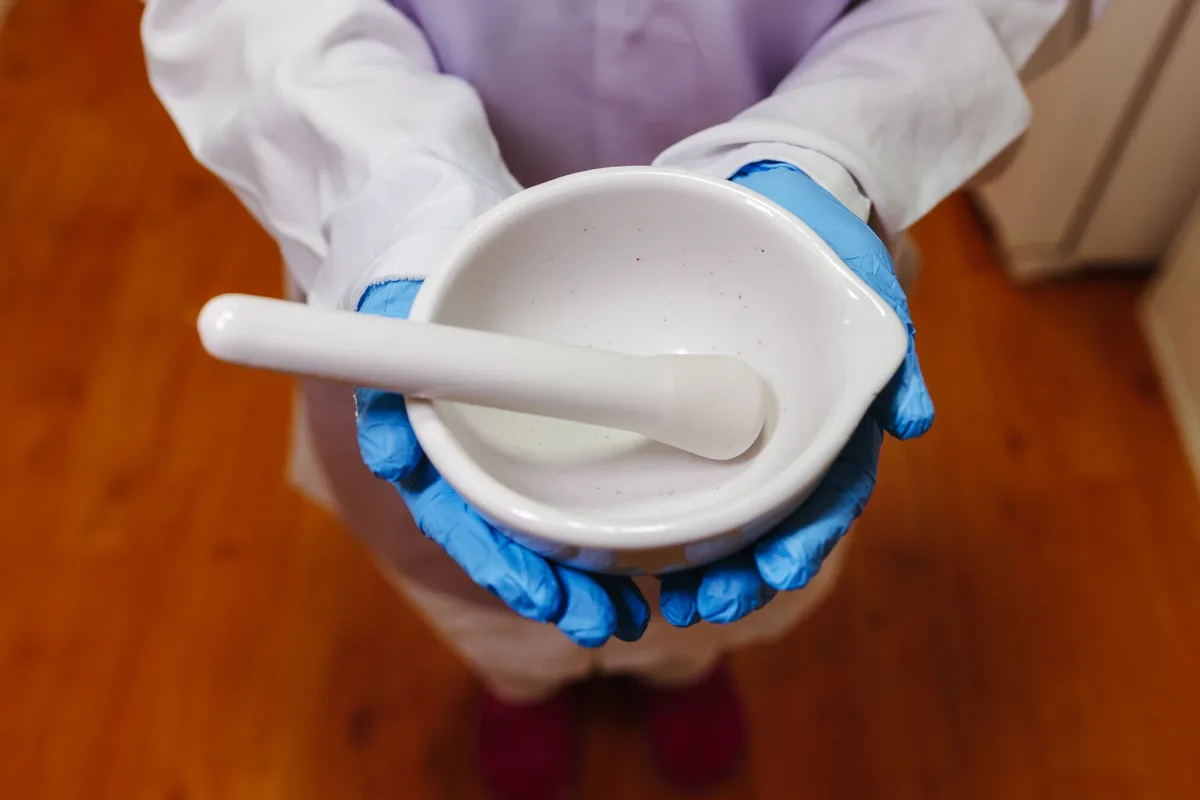
A compounded lozenge or troche dissolved under the tongue, the usual route here. In six nerve-pain patients, about a quarter of a sublingual dose reached the bloodstream. Much of it was already converted to norketamine. That is why the dose is adjusted by your response, not read off a chart. First doses are taken in clinic. After that it is taken at home on a schedule we set.
INTRANASAL
A compounded nasal spray, the other usual route, and faster than the lozenge. In 20 chronic-pain patients with breakthrough flares, intranasal ketamine lowered flare pain within ten minutes, for up to an hour, against placebo. No patient on ketamine needed rescue medication, while seven of twenty on placebo did. Side effects were a brief change in taste, nasal irritation and a short rise in blood pressure.
TOPICAL, COMPOUNDED
A cream combining ketamine, lidocaine and an anti-inflammatory, compounded to our prescription for the skin-level allodynia of CRPS. In 20 CRPS patients, a 10 percent ketamine cream reduced pain from light brushing and pinprick within thirty minutes. Blood levels were too low to detect. That means it works at the skin’s own nerve endings, not the brain. It is for the sleeve-and-bedsheet pain, not the deep ache, and it sits alongside the other routes.
IV INFUSION
Available, and rarely the route chosen. The two placebo-controlled trials used a 4.2-day continuous infusion in 60 patients, and a four-hour outpatient infusion daily for ten days in a smaller group. Both lowered pain. The multi-day trial lowered it for about eleven weeks, with no gain in function and dissociative effects in 76 percent of patients against 18 percent on placebo. The evidence is real. So is the requirement of a monitored chair and a driver, repeatedly, which is the trade-off the routes above avoid.
Why the route decides who gets treated
Ten four-hour infusions is ten trips over the bridge, each with a driver, each a day gone. From Belleville that is about 40 minutes each way with no traffic, and from Godfrey about the same, before the chair time. A sublingual or intranasal course is different. The first dose is watched in clinic, blood pressure and mood are checked, and then you go home. The dose is then steered by telehealth check-ins where that makes medical sense, and by an in-person visit when it does not. For a patient in Highland, about 55 minutes out in free-flowing traffic, that is the difference between a treatment that exists on paper and one they can actually take. The contraindication list from the 2018 consensus guideline on ketamine for chronic pain, written for infusions, is applied here to every route.
What does the evidence show for ketamine in CRPS?
The randomized evidence in CRPS is for infusion, in patients with long-standing disease: a median of more than seven years of it in the multi-day trial. The 2018 consensus guideline said plainly that most ketamine studies were small, uncontrolled or poorly blinded. It said the long-term picture has not been established, and that is still true. The sublingual and intranasal routes rest on pharmacokinetic studies (how the drug moves through the body) and trials in other pain groups, not on a CRPS trial of their own. We tell patients exactly that. The mechanism is sound. The infusion trials support trying the drug. The home routes are how we make trying it possible. And how long relief lasts is measured in you, not read from a paper.
Our position is that ketamine is one input into a plan, not the plan. It is paired with sympathetic blocks where the limb shows a sympathetic component. It is paired with graded movement and desensitization while the volume is down. And it is paired with the behavior and lifestyle work that is roughly 40 to 50 percent of the plan. That includes Acceptance and Commitment Therapy delivered in-house by a licensed, pain-trained behavioral clinician. A quieted receptor in a person who is still afraid to move the limb and still not sleeping does not stay quiet.
What happens on the first ketamine dosing day?
- Screening and baseline: blood pressure, heart rate, mood, the full medication list, and a pain and allodynia map of the limb.
- What dissociation feels like, explained so it is not a surprise.
- First sublingual or intranasal dose taken in the room, low. You are watched for the next hour or so, with vitals rechecked.
- Home with a driver, with the titration schedule written down and the cream, if prescribed, started on the allodynic skin.
- Check-ins by telehealth where clinically appropriate. We ask directly about pain, mood, dissociation and blood pressure. The dose is adjusted from your answers, with an in-person visit whenever they call for one.
Risks, plainly: a floating or detached feeling, nausea, drowsiness, a rise in blood pressure and heart rate, and nasal irritation with the spray. Bladder irritation has been reported with heavy long-term use, mostly outside medical supervision, and we tell you anyway. No driving on the day of a dose. Uncontrolled high blood pressure, active psychosis, and pregnancy rule out systemic dosing. A history of substance use disorder involving ketamine or similar drugs means a slower, more closely watched plan, not an automatic no.
Frequently asked questions
Is CRPS the same thing as RSD?
Reflex sympathetic dystrophy is the older name for the same condition. It was retired because the sympathetic system turned out to be one driver among several, including the NMDA amplification ketamine targets. The diagnosis itself is on complex regional pain syndrome.
Why not just do the infusion if the trials used it?
Because a treatment that requires ten monitored days and ten drivers is one that many Illinois patients cannot complete, and an incomplete infusion course helps nobody; the home routes deliver the same molecule on a schedule that survives real life. How visits are staged for a long-drive patient is on for Illinois patients.
Does the cream do anything for the deep ache?
Very little. It works at the skin’s nerve endings, which is why it treats the touch pain and not the ache underneath. The deep, blood-vessel side of CRPS is what a sympathetic nerve block tests and treats.
Will I be on ketamine indefinitely?
The aim is a window. In it, the limb is retrained and the nervous system re-learns that touch is safe. After that, the dose comes down. A dose that only ever climbs is a sign the plan around it is missing something. The part of the plan that makes the window count is on sleep, movement and behavior.
How is ketamine prepared for CRPS?
The sublingual, intranasal and topical forms are made by a compounding pharmacy to our prescription. Before anything is prescribed, we explain what dissociation feels like so it is not a surprise.
What are the side effects of ketamine for CRPS?
A floating or detached feeling, nausea, drowsiness, a rise in blood pressure and heart rate, and nasal irritation with the spray. Bladder irritation has been reported with heavy long-term use, mostly outside medical supervision. There is no driving on the day of a dose. Blood pressure, mood and dissociation are asked about directly at every check-in, and the dose is adjusted from your answers.
Can ketamine for CRPS be taken by mouth?
Yes, as a compounded lozenge or troche dissolved under the tongue, which is the usual route here. Only part of a sublingual dose reaches the bloodstream. So the dose is adjusted by your response, not read off a chart. The first dose is taken in clinic and watched, with vitals rechecked. After that it is taken at home on a schedule we set.
Who should not take ketamine for CRPS?
Uncontrolled high blood pressure, active psychosis and pregnancy rule out systemic dosing. The contraindication list from the 2018 consensus guideline, written for infusions, is applied here to every route. A history of substance use disorder involving ketamine or similar drugs is not an automatic no. It means a slower, more closely watched plan.
Related reading
- Complex regional pain syndrome
- Sympathetic nerve blocks
- Spinal cord stimulation
- Opioid stewardship
- For Illinois patients
We will tell you which route fits your case and why, before anything is prescribed
Sublingual, intranasal, topical and intravenous are four different tools with four different demands on your life. You will hear which one we recommend, what it asks of you, and what we expect it to do, in plain words.
505 Buckeye Dr, Suite 200
Troy, IL 62294
Procedure clinic: 4499 Woodson Rd, St. Louis, MO 63134, off I-70 next to St. Louis Lambert International Airport. One bridge from the Metro East.
Sources
- Sigtermans MJ et al. Ketamine produces effective and long-term pain relief in patients with Complex Regional Pain Syndrome Type 1. Pain, 2009. PubMed 19604642
- Schwartzman RJ et al. Outpatient intravenous ketamine for the treatment of complex regional pain syndrome: a double-blind placebo controlled study. Pain, 2009. PubMed 19783371
- Finch PM et al. Reduction of allodynia in patients with complex regional pain syndrome: A double-blind placebo-controlled trial of topical ketamine. Pain, 2009. PubMed 19703730
- Chong C et al. Development of a sublingual/oral formulation of ketamine for use in neuropathic pain: Preliminary findings from a three-way randomized, crossover study. Clinical Drug Investigation, 2009. PubMed 19366273
- Carr DB et al. Safety and efficacy of intranasal ketamine for the treatment of breakthrough pain in patients with chronic pain: a randomized, double-blind, placebo-controlled, crossover study. Pain, 2004. PubMed 15109503
- Cohen SP et al. Consensus Guidelines on the Use of Intravenous Ketamine Infusions for Chronic Pain From the American Society of Regional Anesthesia and Pain Medicine, the American Academy of Pain Medicine, and the American Society of Anesthesiologists. Regional Anesthesia and Pain Medicine, 2018. PubMed 29870458