Pain management · Granite City, IL
A rotating shift at the Granite City mill takes the sleep first and the back second. By the time the back hurts, the two are the same problem.
Interventional pain care for Granite City, about 25 minutes free-flow from the clinic. The shift worker’s back and the sleep debt that keeps it sensitized are treated as one problem.
The closest steel town to this clinic
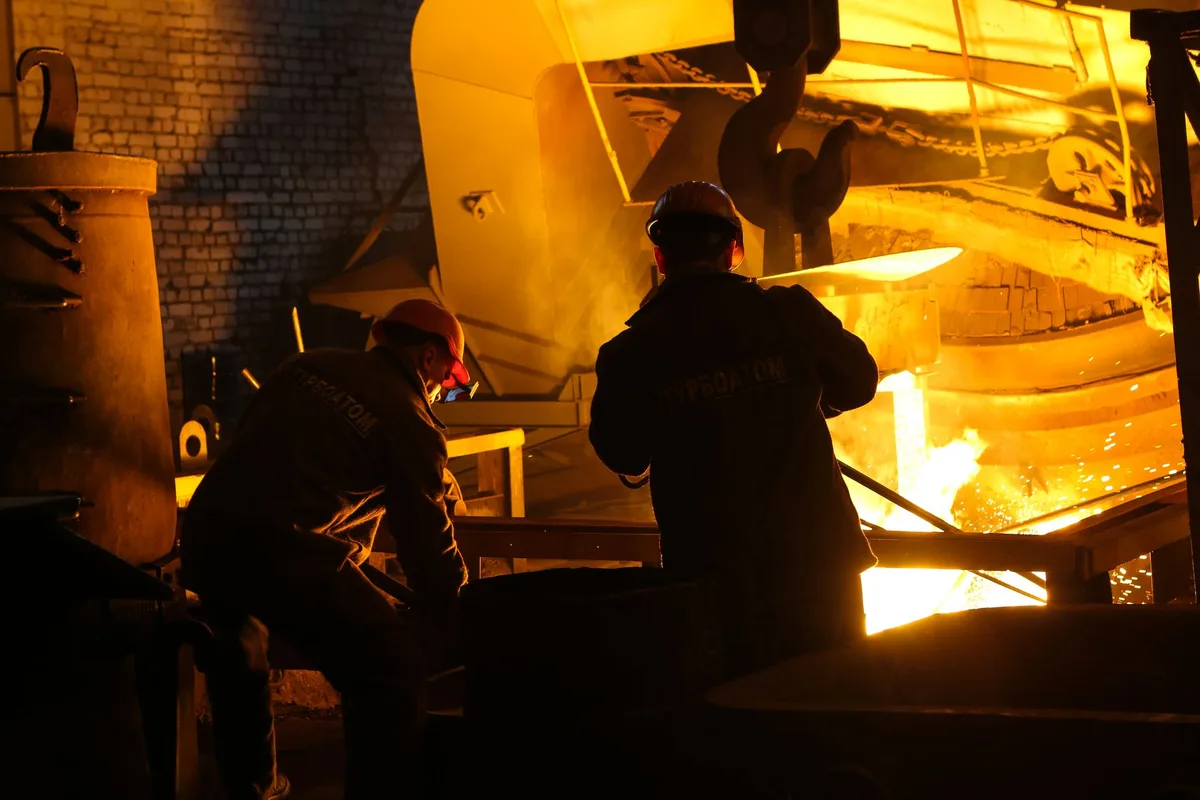
Granite City grew up around its steel works on the Chain of Rocks Canal, with I-270 across its northern edge and Route 3 running down the west side to the McKinley Bridge. It is the nearest of the Madison County towns to the clinic: about 15.8 miles and roughly 25 minutes at free-flow speed with no traffic modeled, up I-270, across the Chain of Rocks, down I-170 or Lindbergh, and off I-70 at Woodson Rd beside the airport. East St. Louis is the only Metro East town closer. In other words, it is close enough to be seen between the end of a night shift and the start of sleep. For this page’s patient, that is the only window there is.
Can shift work cause back pain?
For a decade the pain field has been finding out that poor sleep is not a symptom of pain. It is a cause of it. The meta-analysis of sleep loss in healthy volunteers shows pain thresholds dropping after one lost night, before any injury. The person is simply more sensitive to the same input. The longitudinal work goes further. Poor sleep predicts new pain and worse pain more reliably than pain predicts poor sleep. And the meta-analysis on shift work finds shift workers carry higher odds of low back pain than day workers. The extra risk comes from night shifts, not from rotation as such.
The mechanism has three parts. First, deep slow-wave sleep is when the brainstem’s descending inhibition is restored. That is the system that turns pain signals down at the spinal cord, and a rotating schedule never lets it fully reset. Second, a body eating at three in the morning under fluorescent light has its melatonin held down and its insulin rising. The metabolic inflammation that follows shows up in the shift-work research as higher rates of metabolic syndrome, diabetes and heart disease. That link is suggestive, not conclusive. Inflamed tissue heals slowly and hurts more. The third part is social and economic. The night pay covers the mortgage, and the family runs on a day schedule. So the night worker is alone in the house at the hours when a sensitized nervous system does its worst. Isolation is a pain driver in its own right, and rotation creates it.
What causes lower back pain in mill and factory workers?
Heavy industry loads the spine in the ways every job study describes: lifting, twisting under load, vibration, heat, and long hours on concrete. The parts that fail are the ordinary ones, and they are tested the ordinary way.
FACET, DISC OR SACROILIAC
Pain across the belt line that is worst standing and twisting is a facet joint. It is tested with a medial branch block and treated, if the block holds up, with radiofrequency ablation. Pain below the knee in a line is a disc pressing a root. Buttock pain that hurts when you roll over is the sacroiliac joint. The scan shows all three as worn; the block says which one is talking.
THE BACK THAT HURTS EVERYWHERE
Years of rotation can leave pain all over, a normal scan and a nervous system with the volume turned up. That is nociplastic pain, and it is the pattern that has been injected again and again with nothing to show. It responds to the sleep, food and behavior half of the plan, not to another needle. When injections stop working explains how it is recognized.
SKIP THE CLINIC, GO TONIGHT
Weakness spreading in a leg, bladder or bowel control changing, numbness where you sit, a fever with the back pain. None of those waits for a shift to end. They go to an emergency department, and the emergency list is the one page on this site to read first.
Can better sleep reduce back pain?
The injection buys the window. For a shift worker, what fills it is a sleep prescription, written with the same care and for the same body-based reasons. Anchor sleep at a fixed block that survives the rotation, so the descending inhibition gets at least one reset a day. Get bright light on waking and darkness before sleep, because light sets the body clock, not the schedule. Keep meals to a window that ends before the second half of the night, because insulin at four in the morning is the worst-timed insulin of the day. A licensed pain-trained clinician inside this practice provides Acceptance and Commitment Therapy, because a man told for ten years that his back is simply worn out has a belief to unlearn as well as a joint to treat. Forty to fifty percent of the plan is that work, and it is why the ablation lasts.
34%
of patients arriving on opioids are fully weaned within one year under interventional treatment here, and 21% within 90 days; arriving patients average more than 90 MME per day after two and a half years of pain. Practice-reported figures from our own population, not trial outcomes, and individual results vary.
Who can treat a work injury under Illinois workers’ compensation?
Under 820 ILCS 305/8(a) an Illinois worker gets two choices of treating physician, the so-called chain of referral, unless the employer has an approved preferred provider program, with the Illinois Workers’ Compensation Commission administering the claim. Cumulative injury from years of the same load is a recognized category, and what it needs from us is a diagnosis tied to a named structure with the mechanism written plainly. A case-specific question belongs with an attorney or the IWCC; the work injury page covers what the record has to establish.
Neighbors along the river
Frequently asked questions
Can I be seen between shifts?
The office runs Monday to Friday, 8:00 a.m. to 5:00 p.m., and Granite City is close enough that an early morning slot after a night shift or a late afternoon one before it is workable; booking details are on the contact page.
Is the sleep causing the pain, or the pain causing the sleep problem?
Both, but the evidence runs more strongly from sleep to pain. Lost sleep lowers pain thresholds in healthy people and predicts new pain in longitudinal studies. That is why the sleep prescription is part of the spine treatment on sleep, movement and behavior.
Does a back that wore out over years at the mill count as a work injury in Illinois?
Cumulative injury is a recognized category in Illinois workers’ compensation, a case-specific question is for an attorney or the IWCC, and what the medical record has to establish either way is on injured at work.
Will you make me give up the night shift?
Changing the schedule is rarely possible and rarely the prescription. Anchoring sleep, timing light and keeping meals inside a window are, and the reasons for each are on metabolic health and pain.
Which bridge from Granite City?
The Chain of Rocks. Take I-270 across it, come down I-170 or Lindbergh, and leave I-70 at Woodson Rd. It is about 16 miles and roughly 25 minutes free-flow; every Illinois route is on for Illinois patients.
What are the different types of pain management?
Here the plan has three working parts. The interventional part tests the structure first, such as a medial branch block for a facet joint, and treats it with radiofrequency ablation if the block holds up. The second part is sleep and food: an anchor sleep block, light timed to waking, and meals that end before the second half of the night. The third is Acceptance and Commitment Therapy with a pain-trained clinician.
What kind of doctor is best for pain management?
For a back that has been scanned and injected without an answer, look for a doctor who tests before treating. Dr. Gurpreet Singh Padda, MD, MBA, MHP is an anesthesiologist and interventional pain physician, and a diplomate in addiction medicine and in obesity medicine. That mix matters for a shift worker, because the block finds which structure is talking while the sleep, metabolic and behavior work keeps the nervous system from turning the volume back up.
What should I tell a pain management doctor at the first visit?
Tell us the truth about your schedule. Which shift you worked last week, how many hours you slept last night and where the pain stops all change the diagnosis. Pain across the belt line points at a facet joint. Pain below the knee in a line points at a disc. Pain that is everywhere with a normal scan points at a sensitized nervous system, not one joint.
Related reading
- Sleep, movement and behavior
- Injured at work
- Facet joint pain
- Opioid stewardship
- Pain management in East St. Louis
- Pain management in Wood River
We will ask what shift you were on last week before we ask where it hurts
Tell us the rotation, how many hours of sleep you got last night, and where the pain stops. The first visit from Granite City is built around the schedule you actually keep.
505 Buckeye Dr, Suite 200
Troy, IL 62294
Procedure clinic: 4499 Woodson Rd, St. Louis, MO 63134, off I-70 next to St. Louis Lambert International Airport. One bridge from the Metro East.
Sources
- Schrimpf M et al. The effect of sleep deprivation on pain perception in healthy subjects: a meta-analysis. Sleep Medicine, 2015. PubMed 26498229
- Finan PH et al. The association of sleep and pain: an update and a path forward. The Journal of Pain, 2013. PubMed 24290442
- Chen HM et al. Association of Low Back Pain with Shift Work: A Meta-Analysis. International Journal of Environmental Research and Public Health, 2023. PubMed 36673675
- Wang XS et al. Shift work and chronic disease: the epidemiological evidence. Occupational Medicine, 2011. PubMed 21355031