Steroid injection blood sugar · A1C
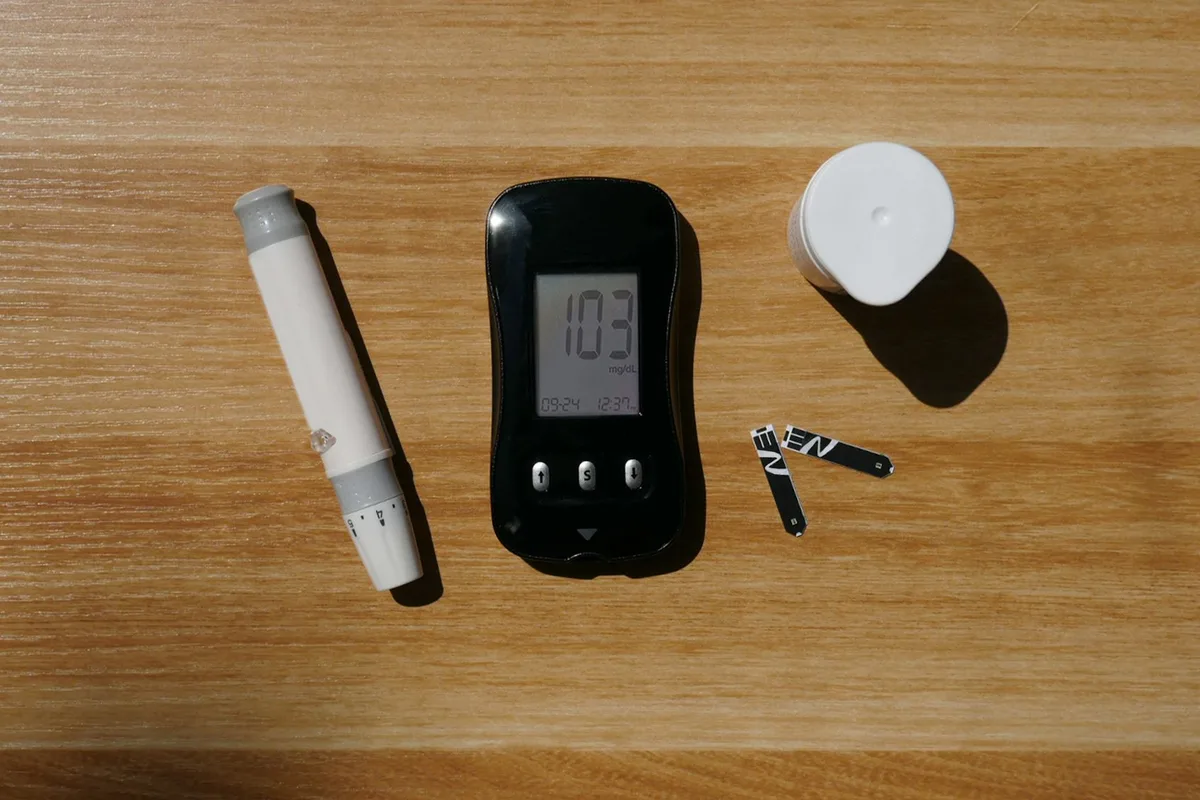
The steroid we inject will raise your blood sugar for days. We want your number before that, not after.
A steroid injection pushes glucose up for days, and insulin resistance slows every tissue we want to heal. Checking blood sugar at a pain visit is safety and diagnosis at once.
Why does a steroid injection raise blood sugar?
The corticosteroid in an epidural or a joint injection is a whole-body (systemic) drug given locally, and it does not stay local. It tells the liver to release glucose. It tells muscle and fat to stop taking it up. That is the same thing it does when swallowed as a tablet. In a prospective series of diabetic patients receiving epidural steroid injections, blood glucose rose significantly and took about two days to settle. A second study compared two steroid doses and found the rise grew with the dose. A third measured both the glucose rise and the drop in the body’s own cortisol after epidural and shoulder injections, in diabetic and non-diabetic patients. None of that is a reason not to inject. It is a reason to know the starting point, and to set the dose and the timing against it.
Why check blood sugar if you are not diabetic?
The general population is not the healthy baseline people imagine. On NHANES 2009–2016, fewer than 12.2% of US adults qualified as metabolically healthy. When the stricter cardiometabolic criteria were applied after 2021, that fell to under 7%. Walk into this clinic and the share drops again: under 3% across all patients and under 1% of those with chronic pain. Both are practice-reported figures from our own population, not trial outcomes, and individual results vary. So the person in the chair for a spine injection is, far more often than not, already insulin resistant, whether or not any number has crossed a diagnostic line.
Insulin resistance is a pain problem in three ways. First, high insulin drives fat tissue to release inflammatory signals into the blood. That raises the baseline a local anti-inflammatory has to push against. Second, high glucose glycates collagen, which means sugar sticks to it and stiffens it. The ring of the disc and the capsule of the facet joint get stiff, so they tear instead of flexing. Third, the small vessels that feed nerve roots and disc endplates narrow under the same process. So injured tissue heals slowly and irritated nerves fire easily. In 2026, investigators pooled the American NHANES survey with the Chinese CHARLS cohort. They found metabolic health predicting chronic pain in adults who were not obese. That is the point of measuring it, not guessing from the waistline. One more driver is the schedule: rotating shifts and late meals keep insulin high through the hours the body had for repair.
What he used to say about an A1C of 5.9
For twenty years Dr. Gurpreet Singh Padda, MD, MBA, MHP told patients with a hemoglobin A1C in the high fives that they were not diabetic and there was nothing to do yet. He was reading the last number to move. Fasting insulin had been high in most of them for years before the A1C stirred. Their back pain was the inflammation that high insulin had been driving the whole time. What changed his practice was watching those same patients come back from injections with shorter relief and higher sugars. He realized the two facts were one fact.
Which blood tests are ordered, and what happens if A1C is high?
- Fasting glucose and fasting insulin, because the insulin moves first.
- Hemoglobin A1C, the three-month average. It is the number that decides how much steroid is safe.
- Triglyceride-to-HDL ratio, already inside a standard lipid panel. It is a good stand-in for insulin resistance.
- High-sensitivity C-reactive protein, the inflammatory baseline.
A high A1C changes three things. The steroid dose comes down or the injection waits, depending on how high. You are asked to check your sugar the evening of the procedure and the next two mornings. Treat a high reading as expected, not an emergency, but tell us if it does not settle. And your Illinois physician gets a call, because a diabetic-range A1C found at a pain clinic is a diagnosis that belongs in primary care, and we are not going to sit on it. The metabolic half of the plan starts the same day. The eating window, the walking dose and the sleep window are written to your shift, not to a textbook, because lowering insulin is what makes the next injection last longer than the last one.
Frequently asked questions
How long does a steroid injection raise blood sugar?
Several days in most people, and longer or higher in diabetic patients. The rise grows with the dose, which is why the plan on the epidural steroid injection page starts with your numbers.
Can I have an epidural if I am diabetic?
Usually, with the dose and timing set against your A1C and your own glucose checks afterward. The reasoning is on the metabolic health and pain page.
Why would a pain clinic check insulin and not just glucose?
Because fasting insulin rises years before glucose does. And it is the insulin that drives the inflammation feeding a herniated disc or an irritated joint.
Does high blood sugar make nerve pain worse?
It narrows the small vessels that feed nerves and slows their repair. That is the mechanism behind peripheral neuropathy and part of why irritated nerve roots stay irritated.
Will my Illinois doctor get the results?
Every result goes to the physician you name, and the way we share findings with Illinois referrers is on the physician page.
How should I check my blood sugar after a steroid injection?
Check it the evening of the procedure and again the next two mornings. A high reading in that window is expected, not an emergency, because the steroid tells the liver to release glucose and tells muscle and fat to stop taking it up. Tell us if the number does not settle. If you are diabetic, the dose and timing were already set against your A1C.
Is there an A1C level that stops a steroid injection?
A high A1C changes the plan; it does not end it. Depending on how high it is, the steroid dose comes down or the injection waits. You check your sugar afterward, and your Illinois physician gets a call, because a diabetic-range A1C found at a pain clinic is a diagnosis that belongs in primary care. The metabolic half of the plan starts the same day.
Does a steroid injection raise blood sugar if you are not diabetic?
Yes. The steroid acts the same way in everyone. It is a whole-body (systemic) drug given locally, and it does not stay in the joint or the spine. One of the studies cited on this page measured the glucose rise, and the drop in the body’s own cortisol, in diabetic and non-diabetic patients. Most people in the chair here are already insulin resistant, whether or not a number has crossed a diagnostic line.
Can lowering insulin make injections last longer?
Yes, and that is why the metabolic half of the plan starts the same day as the pain plan. High insulin drives inflammation, stiffens disc and joint tissue, and narrows the small vessels that feed nerve roots. So tissue heals slowly. The eating window, the walking dose and the sleep window are written to your shift, because lowering insulin is what makes the next injection last longer than the last one.
Related reading
- Metabolic health and pain
- Epidural steroid injection
- Peripheral neuropathy
- Sleep, movement and behavior
- Driving home after a spine injection
We will know your number before the needle does
Bring recent bloodwork if you have it; if not, it is drawn at the first visit. The result is explained in plain language, it sets the dose, and it goes to your own physician the same day.
505 Buckeye Dr, Suite 200
Troy, IL 62294
Procedure clinic: 4499 Woodson Rd, St. Louis, MO 63134, off I-70 next to St. Louis Lambert International Airport. One bridge from the Metro East.
Sources
- Even JL et al. Effects of epidural steroid injections on blood glucose levels in patients with diabetes mellitus. Spine, 2012. PubMed 21540770
- Kim WH et al. Effects of two different doses of epidural steroid on blood glucose levels and pain control in patients with diabetes mellitus. Pain Physician, 2013. PubMed 24284841
- Moon HJ et al. Changes in blood glucose and cortisol levels after epidural or shoulder intra-articular glucocorticoid injections in diabetic or nondiabetic patients. American Journal of Physical Medicine & Rehabilitation, 2014. PubMed 24508924
- O’Hearn M et al. Trends and Disparities in Cardiometabolic Health Among U.S. Adults, 1999-2018. Journal of the American College of Cardiology, 2022. PubMed 35798448
- Araújo J et al. Prevalence of Optimal Metabolic Health in American Adults: National Health and Nutrition Examination Survey 2009-2016. Metabolic syndrome and related disorders, 2019. PubMed 30484738
- Li Z et al. Metabolic Health is Highly Predictive of Chronic Pain Among Non-Obese Adults: Evidence from the NHANES and CHARLS Studies. Pain Management Nursing, 2026. PubMed 42191513