First pain clinic visit · Illinois
Forty minutes over the river is a long way to drive for an appointment that only repeats your story. Here is what your first pain clinic visit from Illinois does instead.
Your first visit from the Metro East makes a diagnosis and injects nothing. You get a detailed history and an exam that brings on the pain. Your imaging is read against that exam. Then come bloodwork and a written plan with a stated test. From Edwardsville, Belleville or O’Fallon the drive is about forty minutes, so bring everything the first time.
What a first visit looks like when you come from the Metro East: which bridge, what to bring, what gets examined, and why nothing is injected before the diagnosis.
How far is the drive from the Metro East?
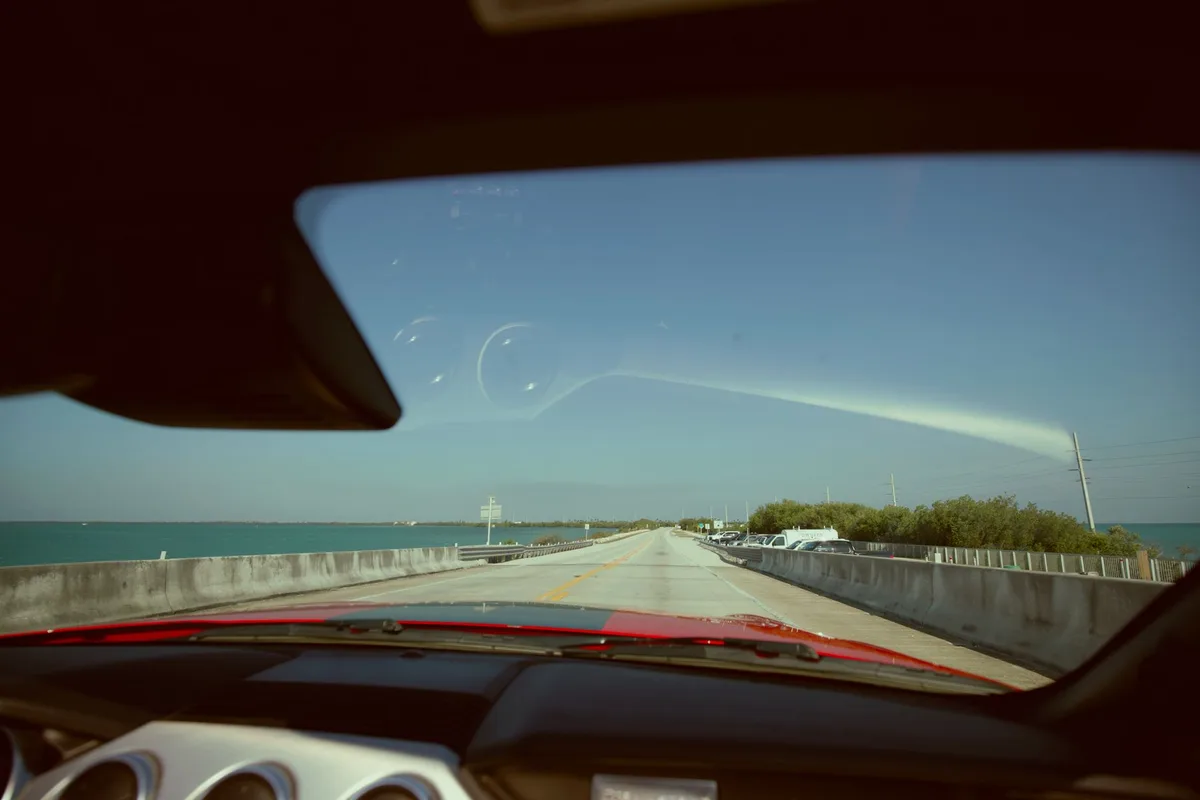
From Granite City the office is about twenty-five minutes with the roads clear. From Alton it is about thirty. From Edwardsville, Belleville or O’Fallon it is about forty. Those are all free-flow times, and none of them allow for a stalled truck on the deck. Madison County traffic takes I-270 west over the Chain of Rocks, then I-170 south or Lindbergh to I-70, and exits at Woodson. St. Clair County traffic takes I-64 west to I-170 north, or I-55/70 over the Poplar Street Bridge to I-70 west. Either way you end next to the airport, off I-70, at 4499 Woodson Rd. Park and come in. Bring everything with you the first time, and you win the drive time back on the return.
What should I bring to my first pain management appointment?
- Any imaging you have, on disc or as a report. A report is enough to start. The disc lets us read the pictures against your exam.
- Every medication and supplement, including the ones you stopped, with doses.
- Recent bloodwork from your Illinois physician, if it exists. It saves a repeat draw.
- A list of what you have stopped doing: the shift you cut, the stairs you avoid, the sleep you lost. We measure progress against function.
- The crash report or work incident report, if there was one. It pins down the mechanism and the date.
What happens at a first pain management appointment?
The question people search most is what a pain clinic does on the first visit. Here it makes a diagnosis, and it does not inject anything. That order matters. The history takes longer than you expect, because the shape of the pain is most of the diagnosis. Where does it start and stop? What makes it worse? What time of day is it at its worst? What does the schedule you live on do to your sleep? Then comes an exam that brings on the pain on purpose. It is uncomfortable, and it tells us a great deal. We check strength, reflexes and feeling, and we load the joints one at a time.
The scan comes after the exam, not before it. The research has been clear about why for a long time. A meta-analysis of imaging strategies for low back pain found no gain from routine early imaging. A systematic review of spinal MRI in people with no pain found degeneration (breaking down) and bulges in most of them by middle age. So we read the report for the finding that matches your exam and set the rest aside. If imaging is missing and the exam says it is needed, we order it then.
Bloodwork is ordered on the first visit. Chronic pain runs on a metabolic terrain that a scan cannot show. The steroid used in most spinal injections raises glucose for days. So fasting insulin, A1C and an inflammatory marker decide both what is safe and what will work. The behavioral history is taken the same day. The reason is that sleep loss, immobility and isolation each turn pain up through mechanisms with names. The treatment for that half of the problem starts here, in-house, alongside the procedures.
Why we stage it for the long-drive patient
A patient forty minutes away cannot come back every week, and should not have to. The plan is written to do more per trip: where the presentation allows, the diagnostic block that answers the main question is scheduled so that the drive home becomes part of the data, and follow-up on results happens by telehealth where that is clinically appropriate. The distance is never a reason to repeat last time’s treatment instead of asking a new question.
What do you leave the first visit with?
You leave with a working diagnosis in plain language. You get a stated test and the result that would change the plan. You get the labs pending. And you get the behavioral and lifestyle half of the plan, with the body-based reasons attached. Your Illinois physician gets a copy. If the pattern belongs on the emergency list, you will hear that first. If surgery is not part of the plan for your condition, you will hear that too.
Frequently asked questions
What does a pain clinic do on the first visit?
It takes a detailed history and examines you to bring on the pain. It reads any imaging against that exam. It orders bloodwork and writes a plan with a stated test. It does not inject anything. What to expect lays it out.
Do I need a referral from my Illinois doctor?
A referral is not required. A note from your physician on what has been tried does shorten the visit. How we work with Illinois referrers is on the physician page.
Should I get an MRI before I come?
Not on its own account. The exam decides whether imaging is needed and where. The sciatica page explains why the line the pain follows matters more than the report.
Will I get an injection on the first day?
The first visit is for diagnosis. A diagnostic block is often the first procedure. What a diagnostic block tells you explains why it is a test, not a treatment.
What disqualifies you from pain management?
Nothing about your history rules you out of an evaluation. What pauses a specific procedure is a safety issue. Examples are an active infection, a blood thinner that has not been managed, or uncontrolled blood sugar. That is why metabolic health is checked first.
Why does a pain clinic order bloodwork on the first visit?
Because chronic pain runs on a metabolic terrain that a scan cannot show. The steroid used in most spinal injections raises glucose for days. So fasting insulin, A1C and an inflammatory marker are drawn at the first visit. Those numbers decide what is safe to inject and what will actually work. If your Illinois physician already has recent bloodwork, bring it. It saves a repeat draw.
Should I bring the MRI disc or just the report?
Bring both if you have them. A report is enough to start. But the disc lets us read the pictures against your exam. That is how we separate the finding that matches your pain from the wear most adults show on a scan by middle age. If imaging is missing and the exam says it is needed, it is ordered at that visit.
Can follow-up visits be done by telehealth?
Yes, where that is clinically appropriate. A patient forty minutes away should not have to cross the river every week. So the plan is written to do more per trip. Follow-up on results happens by telehealth, and where the presentation allows, the diagnostic block that answers the main question is scheduled so the drive home becomes part of the data.
Will my Illinois doctor get a copy of the plan?
Yes. You leave with a working diagnosis in plain language and a stated test with the result that would change the plan. You leave with the labs pending, and the lifestyle half of the plan with its reasons attached. Your Illinois physician gets a copy. A referral is not required. But a note from your doctor listing what has been tried shortens the first visit.
Related reading
- What to expect
- For Illinois patients
- What a diagnostic block tells you
- Driving home after a spine injection
- Metabolic health and pain
The first visit will change the question, not repeat the answer
Bring the imaging, the medication list and the list of what you have stopped doing. You will leave with a diagnosis in plain language and a test with a stated endpoint, and the drive will have been for something.
505 Buckeye Dr, Suite 200
Troy, IL 62294
Procedure clinic: 4499 Woodson Rd, St. Louis, MO 63134, off I-70 next to St. Louis Lambert International Airport. One bridge from the Metro East.
Sources
- Chou R et al. Imaging strategies for low-back pain: systematic review and meta-analysis. Lancet, 2009. PubMed 19200918
- Brinjikji W et al. Systematic literature review of imaging features of spinal degeneration in asymptomatic populations. AJNR American Journal of Neuroradiology, 2015. PubMed 25430861
- Cohen SP et al. Chronic pain: an update on burden, best practices, and new advances. Lancet, 2021. PubMed 34062143
- Hooten WM et al. Chronic Pain and Mental Health Disorders: Shared Neural Mechanisms, Epidemiology, and Treatment. Mayo Clinic proceedings, 2016. PubMed 27344405