Pain management · Highland, IL
Highland is the far edge of this map, nearly an hour out. That drive is the reason the diagnosis here gets made in one visit instead of four.
Pain care for Highland and the farm country at the eastern edge of the Metro East, about 55 minutes free-flow from the clinic. It is staged so you make the long drive as few times as the diagnosis allows.
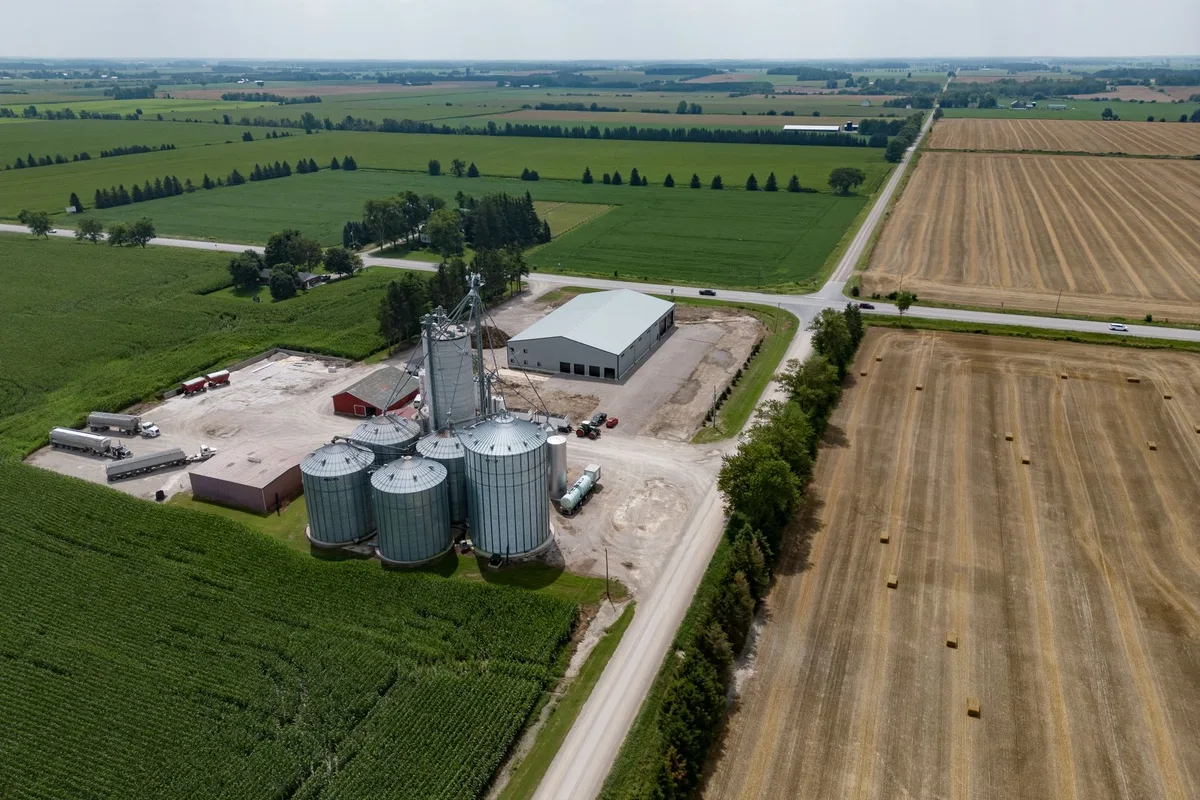
The far edge of the Metro East
Highland sits in eastern Madison County, with I-70 along its northern limits, US-40 through the north side and Silver Lake stretching above it. Swiss-German settlers founded it and first called it Helvetia. Past Troy the subdivisions thin out and the fields begin. Highland is where most people stop saying Metro East. The clinic is about 43.2 miles away and roughly 55 minutes at free-flow speed with no traffic modeled. And it is one road: I-70 west through the split at Troy, over the Stan Musial Veterans Memorial Bridge, I-70 west again, off at Woodson Rd beside Lambert Airport. We do not pretend that is convenient. We design around it.
Is chronic pain more common in rural areas?
The recent rural-urban analysis of US adults found chronic pain more common outside metro areas. The gap tracked the population and income makeup of rural counties, not anything in the water. The systematic review of farmers puts low back pain at the top of their muscle and joint burden. The job review of hip osteoarthritis names farming and heavy lifting among the exposures that wear the hip joint early. Three drivers sit under those numbers. First, the work loads the spine, the hips and the knees harder and for more years than a desk does. Second, metabolic disease runs higher outside the cities. That is the insulin resistance and inflammation that make loaded tissue heal slowly and hurt more. Third, the nearest specialist is an hour away. So the pain is a year older by the time it is examined. And a nervous system that has spent a year sensitizing is a harder problem than the one that started.
That last driver is the one this page exists to shorten. It is worth being exact about what that means. It does not mean a closer clinic doing less. It means the drive you do make ends with a named structure, a written plan and the next test already booked. And the half of the treatment that is behavioral and metabolic is delivered with no drive at all. A Highland patient who has waited a year should not wait another six months of visits to learn which joint is talking.
Is it hip pain or back pain?
THE HIP THAT IS THE HIP
Groin and front-of-thigh pain, worse climbing into a cab, brought on by rolling the leg inward. The hip capsule sits deep, so it is reached by imaging, not by feel. The hip pain page explains what an image-guided injection into it tells us and what it does not.
THE HIP THAT IS THE BACK
Buttock pain that hurts when sitting on one side and rolling over in bed is usually the sacroiliac joint, an inch beside the spine. It is loaded by every step across uneven ground. Pain running down the outside of the leg to the ankle is a lumbar nerve root. Both get called hip pain, and neither is treated by a hip injection.
LEGS THAT GIVE OUT WITH DISTANCE
Legs that go heavy and numb after a set distance across a field, and recover on sitting, are neurogenic claudication from spinal stenosis, measured in distance rather than minutes. The same complaint with cold feet and absent pulses is circulation, not spine, and needs a different doctor first.
What happens at a first pain management visit from Highland?
The visit is built so the drive is not wasted. Records and imaging are read before you arrive. If the imaging is old or missing, we say so in advance, so it can be done on your side of the river first. The physician examines you and reads the scan against that exam. The bloodwork is drawn the same morning, because a farmer with burning feet and a stiff spine may be carrying a metabolic problem that no injection will settle. You leave with a written plan. It names the first diagnostic block, what result would change the next step, and what happens if the block says no. The second trip carries the block. The third carries the treatment. Follow-ups that need no hands or needles are done by video where it is clinically right.
Two blocks or one before an ablation is a real question for a Highland patient, since each is an hour each way. When the first block wipes the pain out for exactly as long as the anesthetic (numbing drug) should last, and the diary shows it, that result stands as the diagnosis. A half-answer earns a second block before any nerve is burned. Ablating on a guess is the one thing the drive does not buy.
What pain treatment can I do without driving to the clinic?
Forty to fifty percent of the protocol is behavioral and metabolic, and none of it needs I-70. Sleep, food, light and movement are prescribed with a physiological reason (how the body works) each time. A sensitized spinal cord calms down only when its inputs change. Cartilage is fed by loading and starved by rest. And insulin resistance is the reason a six-week injury becomes a six-month one. The Acceptance and Commitment Therapy in that plan is delivered by a licensed clinician on this practice’s own staff, trained in pain, with remote sessions where they fit. The procedures buy the window. This work is what fills it, and it is the part a long-drive patient can do without leaving the county.
Closer neighbors on the same road
Frequently asked questions
How many trips from Highland does a diagnosis take?
Usually three: one for the exam and the written plan, one for the diagnostic block, and one for the treatment it points to. A half-answer on the block adds a fourth. The steps and how to prepare are on first visit from Illinois.
Can my Highland physician order the bloodwork and imaging before I come?
Ordering them on your side of the river before the first visit saves a trip. The for physicians page lists what we ask for and how the results reach us.
Do I need a driver for the whole hour back after a procedure?
No. Spine injections and nerve blocks are done without sedation, so most patients drive themselves home. Normal activity, including work, resumes within two to four hours. If an arm or leg feels weak or numb, have someone else drive until that wears off, and the driving home article explains the details.
Will farm work have to stop while I am being treated?
Stopping is rarely the prescription, because rested joints and guarded backs weaken. Changing the load while the diagnosis and the metabolic work go forward is the prescription, and sleep, movement and behavior explains why.
Which road from Highland?
I-70 west the whole way, through the split at Troy and over the Stan Musial Veterans Memorial Bridge, exiting at Woodson Rd beside Lambert Airport, about 43 miles and roughly 55 minutes free-flow; arrival details are on the contact page.
How do I get a pain management doctor to take me seriously?
Bring the facts that change the diagnosis. Send your imaging and records ahead so they are read before you arrive. Tell us the job you do and exactly where the pain stops. A visit built that way ends with a named structure, a written plan and the next test already booked, not a vague follow-up. If the imaging is old or missing, we say so in advance.
What is the difference between pain management and pain relief?
Relief is what a procedure buys. A nerve block or an ablation quiets the signal for a window of time. Management is what fills that window. Forty to fifty percent of the protocol here is sleep, food, light, movement and Acceptance and Commitment Therapy, each with a physiological reason. That is because a sensitized spinal cord settles only when its inputs change.
Do I need one nerve block or two before an ablation?
It depends on the result. When the first block wipes the pain out for exactly as long as the anesthetic should last, and your pain diary shows it, that result stands as the diagnosis. A half-answer earns a second block before any nerve is treated. For a Highland patient each block is an hour each way, but ablating on a guess is the one thing the drive does not buy.
Related reading
- Hip pain
- Spinal stenosis
- Sacroiliac joint pain
- Pain management in Troy
- Metabolic health and pain
- For physicians
An hour each way earns you a visit that ends with a written plan
Send the imaging ahead, tell us the job and where the pain stops, and the first visit from Highland will name the structure and schedule the test before you drive home.
505 Buckeye Dr, Suite 200
Troy, IL 62294
Procedure clinic: 4499 Woodson Rd, St. Louis, MO 63134, off I-70 next to St. Louis Lambert International Airport. One bridge from the Metro East.
Sources
- Talbot JA et al. Rural-urban disparities in the prevalence of chronic pain in adults: Associations with demographic and socioeconomic characteristics. The Journal of Rural Health, 2025. PubMed 40977593
- Osborne A et al. Prevalence of musculoskeletal disorders among farmers: A systematic review. American Journal of Industrial Medicine, 2012. PubMed 22069159
- Harris EC et al. Hip osteoarthritis and work. Best Practice and Research Clinical Rheumatology, 2015. PubMed 26612242