Spinal cord stimulator · Metro East IL
The spinal cord stimulator trial takes a week. The relationship with whoever programs the device runs a decade. Choose for the second one.
Spinal cord stimulation places a programmable current over the spinal cord to change how pain signals are processed. The trial is done in our office. The implant can be done in a hospital. And the programming goes on for years.
How does a spinal cord stimulator work?
A thin lead sits in the epidural space over the back of the spinal cord. A pulse generator feeds it a pattern of electrical pulses. The oldest explanation is the gate. Stimulating the large touch fibers in the dorsal columns crowds out the pain traffic trying to climb the same cord. The last decade filled in more of the picture. The current also changes chemistry in the dorsal horn, where pain signals enter the cord. It releases calming transmitters. It settles the glial cells (support cells) that keep a chronic pain circuit turned up. And it changes activity in the brain regions that give pain its emotional weight. Older systems produced a tingling you felt in place of the pain. Newer high-frequency and burst patterns work below the level you can feel.
That is why this is a nervous-system treatment, not a spine treatment. The disc, the scar and the fused level are all still there. What changes is how loudly the cord reports them, and that depends on the rest of the terrain. A metabolically inflamed body primes glia and lowers pain thresholds. Damaged peripheral nerves feed the cord a constant barrage. A person isolated by years of pain, out of work and sleeping badly, has a brain that expects the worst from every signal. The device works on the cord. The plan has to work on the terrain. If not, the device gets blamed for a result it was never meant to deliver alone.
Who is a spinal cord stimulator for?
THE USUAL CANDIDATES
Leg or arm pain that lasts after spine surgery, the pattern on our failed back surgery syndrome page. And complex regional pain syndrome that has not answered to blocks. In the 2007 PROCESS trial, patients with post-surgical leg pain randomized to stimulation plus medical care were far more likely to reach 50% leg-pain relief at six months than those on medical care alone.
PAINFUL DIABETIC NEUROPATHY
A 2021 randomized trial in JAMA Neurology found high-frequency stimulation produced responders at six months far more often than medical management. The patients had painful diabetic neuropathy refractory to drugs (pain that medicine did not control). It is a real option for the Metro East patient whose feet burn at night. It comes after the metabolic work and the less invasive peripheral nerve stimulation option have been considered.
NOT YET, OR NOT THIS
Untreated depression or an active substance problem, an infection anywhere, blood thinners that cannot be paused, a spine that still has an untested joint or root, or an expectation of zero pain. Each is fixable or can be made clear. None is a reason to implant first and sort out later.
The trial, across the river
The trial is an office procedure at 4499 Woodson Rd. Temporary leads go in through a needle under X-ray and exit through the skin. They plug into a small outside generator clipped to your waistband for roughly seven days. No sedation; you are awake, because your description of where you feel the stimulation is what tells us the lead is in the right place. Then you go home and live a normal week: the commute, the stairs, the shift, the night. You keep a diary. At the end the leads slide out in the office. For a patient from Belleville or Alton that is two crossings a week apart, about 40 and 30 minutes each way with clear roads and no traffic figured in. The bar is a meaningful drop in pain and a meaningful gain in what you could do, both written down. The device has to earn the implant.
Can a spinal cord stimulator be implanted in Illinois?
A permanent system is a surgical procedure in an operating room. The leads are anchored, a generator is placed under the skin of the flank or buttock, with a small incision or two. For a Metro East patient, that operation can be scheduled at Anderson Hospital in Maryville, where Dr. Gurpreet Singh Padda, MD, MBA, MHP holds full privileges. So the day of the implant does not add a river crossing to a sore back. The consultation, the trial and the programming visits stay at the St. Louis office.
How long can you have a spinal cord stimulator?
Most people are not walked through this part of the decision. A generator lasts years and is then replaced. Programs drift. The pain pattern shifts, scar forms around the lead, and weight changes. The settings that worked in year one need adjusting in year three. Leads can migrate and need revision. MRI is possible with most current systems, under conditions that depend on the exact hardware. Someone has to know which hardware you have. All of that is a relationship, not an event. An Illinois patient choosing between a health-system program and an independent practice should ask both one question. Who will be adjusting this in year six, and how do I reach them? Here the answer is the same physician who placed it. The follow-up schedule is built around the drive, with phone checks between the visits that need hands on the programmer.
Do spinal cord stimulators really work?
Beyond PROCESS, a 2015 randomized trial found 10-kilohertz stimulation outperformed traditional paresthesia-based stimulation (the older tingling kind) for back and leg pain. The 2020 Evoke trial tested a closed-loop system that measures the cord’s own response and adjusts itself. It held its results at a year. Against those sits a 2022 trial in JAMA. Fifty patients with radicular pain after lumbar surgery, already implanted, crossed over between burst stimulation and placebo stimulation in three-month periods. Disability scores did not differ. That trial tested one waveform in one small, already-implanted group over short windows. It is worth knowing about. It does not erase the larger body of research. And it does not describe the trial-first, terrain-first pathway used here. The practice position is this. It is a lasting tool for the right nervous system. Half the work is everything around it. And a trial you failed is useful information, which beats an implant you regret.
What happens on the day of the trial
- Baseline written down. Pain by region, sleep, walking distance, the tasks you cannot do. The week is judged against this sheet.
- Face down, skin numbed, needle into the epidural space under X-ray. The lead is threaded up the canal to the level that matches your pain.
- Mapping, awake. The generator is switched on and you report where you feel it. The lead is nudged until the coverage sits over the painful area.
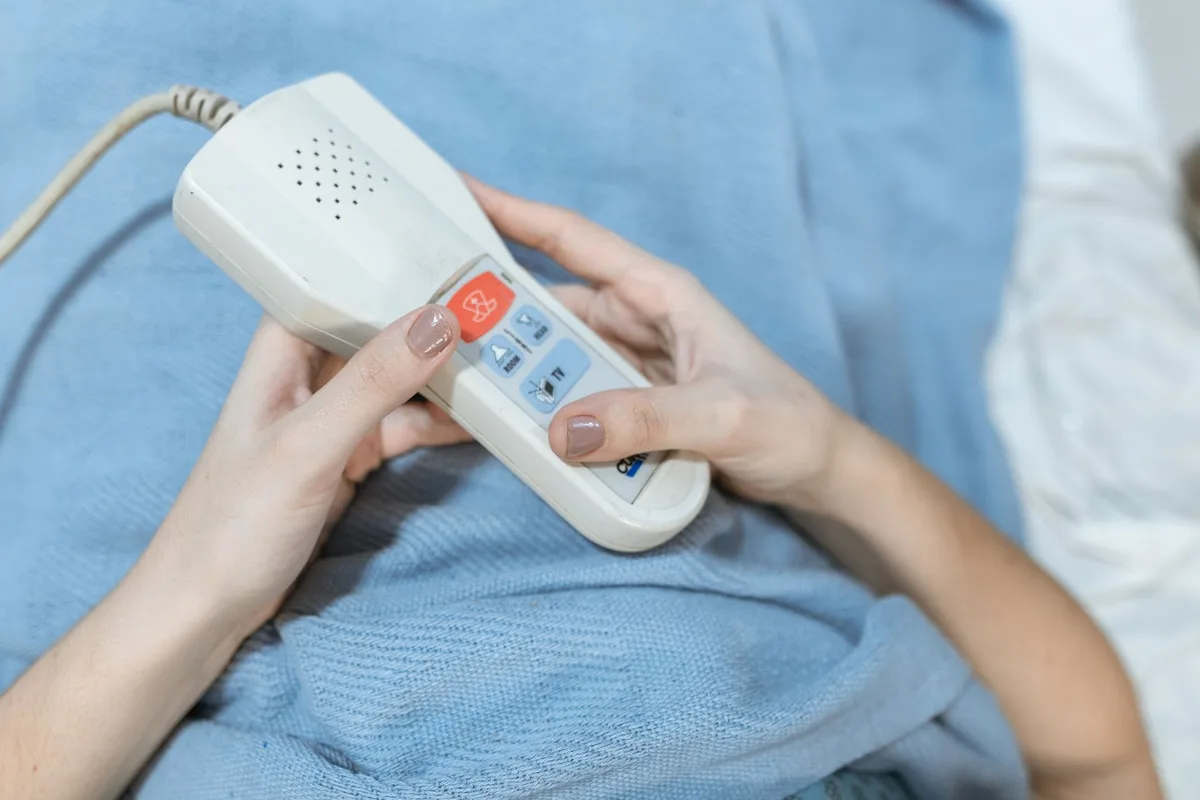
- Leads secured, generator on the belt. A dressing over the exit site, rules for showering and bending, and a programmed handset.
- Home, and a normal week. No sedation, so most patients drive; if a leg is temporarily numb from the local anesthetic, wait it out or bring a driver. Back about a week later for the diary review and lead removal.
Frequently asked questions
Is the trial itself an operation?
The trial is a needle procedure in the office with no incision and no sedation, closer to an epidural than to surgery, and the flow of that day is on our what to expect page.
What happens if the trial does not work?
The leads come out, nothing is implanted, and we have learned that the cord is not where the volume is being set. The other options for lasting pain after surgery are on the failed back surgery syndrome page.
Does it work for diabetic nerve pain in the feet?
A 2021 randomized trial found a large responder advantage for high-frequency stimulation in drug-refractory painful diabetic neuropathy. The terrain that produced the neuropathy still has to be treated, as explained on our peripheral neuropathy page.
Will I still need the other parts of the plan?
The device turns down the cord. It does nothing about the sleep, movement and metabolic terrain that set the cord’s sensitivity. That is why those remain 40–50% of the program. They are described on sleep, movement and behavior.
What are the drawbacks of a spinal cord stimulator?
The implant is surgery, and the device needs care for years afterward. The generator runs down and is replaced. Settings drift as scar forms around the lead, weight changes or the pain pattern shifts. Leads can move and need revision. MRI is possible with most current systems, but only under conditions set by your exact hardware. None of that is a reason to say no. It is a reason to choose who will program it.
Who is not a good candidate for a spinal cord stimulator?
Someone with untreated depression or an active substance problem, an infection anywhere in the body, or blood thinners that cannot be paused. Someone whose spine still has a joint or nerve root that has not been tested, or who expects zero pain. Each of these can be fixed or clarified first. None is a reason to implant now and sort it out later.
What is the success rate of a spinal cord stimulator?
Your own trial week answers that for you. Before the trial, your pain, sleep, walking distance and the tasks you cannot do are written down. After about seven days, the device has to show a meaningful drop in pain and a meaningful gain in what you can do, against that sheet. If it does not, the leads come out and nothing is implanted. The device has to earn the implant.
Related reading
- For Illinois patients
- Peripheral nerve stimulation
- Failed back surgery syndrome
- Intrathecal pump
- Complex regional pain syndrome
- Peripheral neuropathy
Whoever places it will still be programming it years from now
You will trial the device before anything is implanted, you will know the number it has to beat, and the person adjusting it in year six will be the person who put it in.
505 Buckeye Dr, Suite 200
Troy, IL 62294
Procedure clinic: 4499 Woodson Rd, St. Louis, MO 63134, off I-70 next to St. Louis Lambert International Airport. One bridge from the Metro East.
Sources
- Sdrulla AD et al. Spinal Cord Stimulation: Clinical Efficacy and Potential Mechanisms. Pain Practice, 2018. PubMed 29526043
- Kumar K et al. Spinal cord stimulation versus conventional medical management for neuropathic pain: a multicentre randomised controlled trial in patients with failed back surgery syndrome. Pain, 2007. PubMed 17845835
- Kapural L et al. Novel 10-kHz High-frequency Therapy (HF10 Therapy) Is Superior to Traditional Low-frequency Spinal Cord Stimulation for the Treatment of Chronic Back and Leg Pain: The SENZA-RCT Randomized Controlled Trial. Anesthesiology, 2015. PubMed 26218762
- Petersen EA et al. Effect of High-frequency (10-kHz) Spinal Cord Stimulation in Patients With Painful Diabetic Neuropathy: A Randomized Clinical Trial. JAMA Neurology, 2021. PubMed 33818600
- Mekhail N et al. Long-term safety and efficacy of closed-loop spinal cord stimulation to treat chronic back and leg pain (Evoke): a double-blind, randomised, controlled trial. The Lancet Neurology, 2020. PubMed 31870766
- Hara S et al. Effect of Spinal Cord Burst Stimulation vs Placebo Stimulation on Disability in Patients With Chronic Radicular Pain After Lumbar Spine Surgery: A Randomized Clinical Trial. JAMA, 2022. PubMed 36255427