Sacroiliac joint pain · Metro East, IL
Every step down from a truck cab, a loading dock or a tractor lands on the sacroiliac joint first. It was built to absorb that, until it is not.
Sacroiliac joint pain starts in the joint that hands the weight of your whole upper body to one leg at a time. One-sided landings, a prior lumbar fusion, loose ligaments and a metabolic terrain that inflames joints all put it on the list.
What does the sacroiliac joint do?
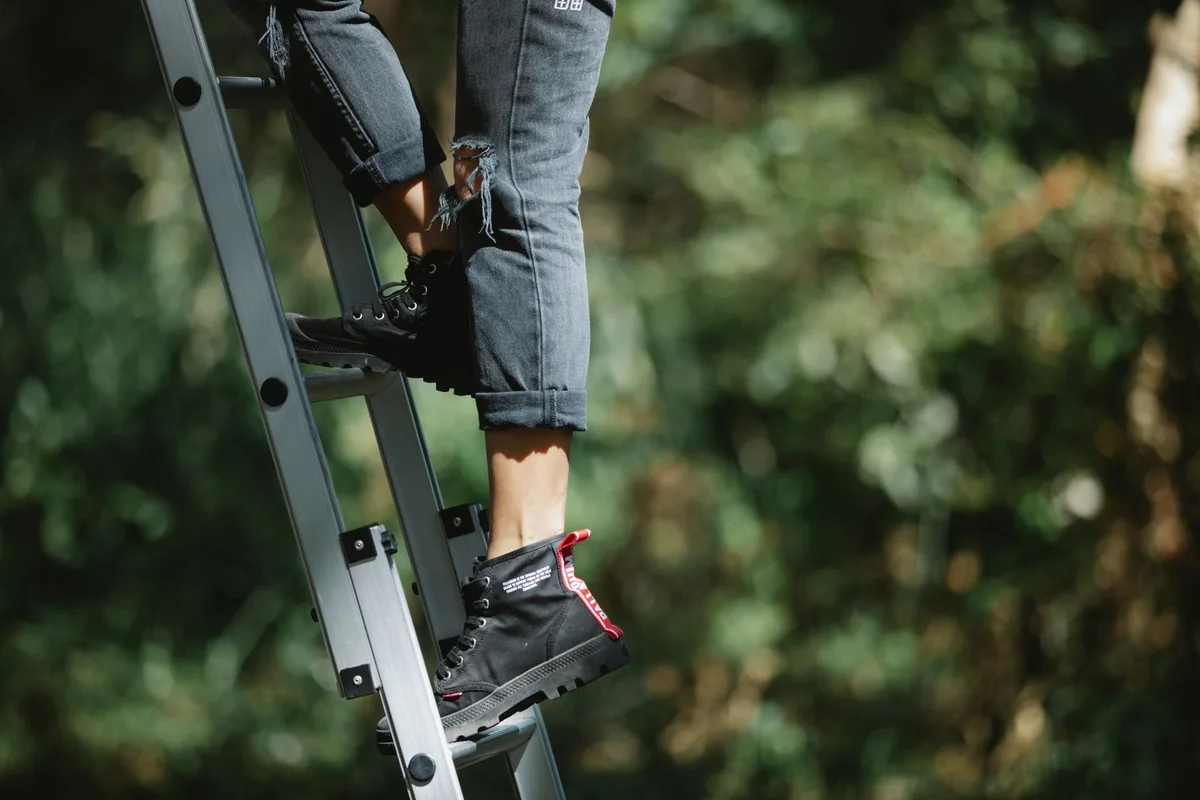
The sacrum is a wedge jammed between the two halves of the pelvis. It is held by the strongest ligaments in the body, and by muscle that clamps it tighter under load. Vleeming and colleagues call the two halves of that stability form closure and force closure. Form closure is the shape of the joint. Force closure is the muscles and ligaments that squeeze it shut. Every time you stand on one leg, all of your upper body crosses one sacroiliac joint on the way to the ground. Stepping down from a truck cab at the Wood River refinery gate, dropping off a dock at the warehouses around Edwardsville, carrying a toddler on one hip, driving 40 minutes with one foot working the pedal: each is a one-sided landing. The joint was built to take thousands of them. It was not built to take them after the force closure has failed.
What causes sacroiliac joint pain?
Cohen and colleagues put the sacroiliac joint behind 15 to 30% of chronic low back pain that does not involve a nerve root. Maigne and colleagues, using paired anesthetic blocks in 54 patients with low back pain, confirmed it in 18.5%. The joint is where the spine’s load path ends. So anything that changes the load path upstream changes what it receives.
75%
Ha and colleagues followed 32 patients for five years after instrumented lumbar or lumbosacral fusion and found sacroiliac joint degeneration in 75% of them, against 38.2% of matched controls who had no fusion. Ivanov and colleagues modeled why: fusing the lumbar segments shifts angular motion and stress downward onto the sacroiliac joint. A solid fusion is a load moved, not a load removed.
Then the tissue itself. The front of the joint is synovial (lined like a knee) and the back is ligament. Both inflame on a metabolic terrain. Insulin resistance and the hormones released by visceral fat (the deep fat around the organs) keep a low-grade inflammatory signal running through every joint lining in the body. That is why the same patient so often has a sore sacroiliac joint, a sore knee and a rising A1C at the same visit, and has never been told they are connected. Pregnancy adds ligament looseness that can outlast the pregnancy by years. The return after birth to a job that lands on one leg is a common start. Behind all of that sits use. The step down that always lands on the same foot. The pallet carried on the same side. And the sleep lost to a rotating shift, which lowers the threshold at which any of it hurts.
What are the symptoms of sacroiliac joint pain?
The pain sits below the beltline, usually on one side. The patient can often put a finger on it just inside the back of the pelvic bone. It is worse with single-leg loading, stairs, getting out of a car and turning over in bed. It can spread into the buttock, groin or upper thigh without the numbness of a nerve root. Laslett and colleagues tested provocation maneuvers against an anesthetic block in 48 patients. These are exam moves that stress the joint. Three or more positive tests out of six carried 94% sensitivity and 78% specificity. That is good enough to select, not good enough to treat on. The image-guided sacroiliac injection is the test that confirms it, because a joint that deep and that uneven cannot be entered reliably by hand.
MECHANICAL SACROILIAC PAIN
One-sided pain below L5, a positive provocation cluster, no nerve root signs, and relief from an image-guided anesthetic injection into the joint. The plan is force-closure retraining plus the terrain work. A steroid injection is added where the inflammation needs quieting first.
INFLAMMATORY SACROILIITIS
Pain in a younger patient with more than half an hour of morning stiffness that improves with movement. It wakes them in the second half of the night, sometimes with an eye or bowel history. That is a different disease. It shows on MRI where mechanical pain does not, and it gets a rheumatology conversation before an injection.
FRACTURE OR INFECTION UNTIL PROVEN OTHERWISE
Sudden inability to bear weight after a fall in a patient with thin bones, fever with buttock pain, or a joint that became hot and swollen after any procedure. Those belong in an emergency room; when it is an emergency lists them.
How is sacroiliac joint pain treated?
The confirming injection can carry steroid and buy a window. What fills the window is the force closure that the ligaments stopped providing. The gluteus maximus and the latissimus on the opposite side tighten the joint through the thoracolumbar fascia (a sheet of tissue across the low back). Training them is the mechanical treatment, because a joint clamped shut by muscle cannot shear. The one-sided habit gets corrected at its source. That means alternating the landing foot on the step down, using the cab step instead of the drop, and carrying on both sides. Insulin and weight are treated because the synovial half of the joint is bathed in the same inflammatory signal as every other joint. Sleep is treated because turning over in bed is the trigger, and a short night lowers the threshold at which it hurts. That is the 40 to 50 percent of the protocol with no needle in it. The bracing that makes a patient stiffen through every step goes to the licensed, pain-trained behavioral clinician on our own staff for Acceptance and Commitment Therapy, because a braced pelvis loads the joint harder than a moving one.
When the relief from injection keeps proving the joint but keeps running out, lateral branch radiofrequency ablation can lengthen the window in selected patients. The trial evidence is thinner than for the facets, and you will be told that before you agree. Fusion of the sacroiliac joint itself is a surgical option. This practice saves it for the patient who has proven the joint again and again and used up the rest.
Frequently asked questions
Do I need a referral for sacroiliac joint pain?
No. You can book an SI joint evaluation yourself. A few plans, mostly HMOs, want a referral on file before they pay, so look at your card first. The workup usually ends in a test block, and what a diagnostic block tells you explains how to read its answer.
Can a lumbar fusion cause sacroiliac joint pain?
It moves the load that the fused segments used to absorb down onto the sacroiliac joint. In a five-year cohort, three quarters of fusion patients showed degeneration there. Pain that arrives after a technically successful fusion is covered on failed back surgery syndrome.
How is sacroiliac joint pain diagnosed?
A cluster of provocation tests on the exam selects the joint. An anesthetic injection placed under imaging confirms it. That is because the exam alone is right often enough to suspect, but not often enough to treat. The sacroiliac joint injection page explains the confirming test.
Is sacroiliac joint pain the same as sciatica?
Sacroiliac pain spreads into the buttock and thigh without the numbness, weakness or below-the-knee line of a nerve root. It is worse on one-leg loading, not sitting. Pain that runs down the leg in a line belongs on the sciatica page.
Does radiofrequency ablation work on the sacroiliac joint?
It can extend relief in patients who have proven the joint with injection more than once. The evidence is thinner than for facet ablation, and we say so before it is offered. The radiofrequency ablation page covers the lateral branch version.
I hurt it stepping off a trailer at work in Illinois. What changes?
The IWCC administers the claim, the two-choice rule generally leaves the choice of physician with you, and function measured at every visit becomes the record the claim runs on. Injured at work covers it without giving legal advice.
What are the best exercises for sacroiliac joint pain?
Exercises that restore force closure, the muscle clamp that holds the joint shut. The gluteus maximus and the latissimus on the opposite side tighten the joint through the thoracolumbar fascia. So training them is the mechanical treatment: a joint clamped shut by muscle cannot shear. Pair that with changing how you land. Alternate the lead foot on the step down, and carry loads on both sides.
What should you not do with sacroiliac joint pain?
Stop repeating the same one-sided landing: always stepping down on the same foot, dropping off a dock or cab instead of using the step, carrying on one side. Do not brace and stiffen through every step, because a braced pelvis loads the joint harder than a moving one. And do not treat short sleep as harmless. A short night lowers the threshold at which the joint hurts.
What is the one-finger test for sacroiliac joint pain?
Patients with this pain can often put one finger on the spot. It is just inside the back of the pelvic bone below the beltline, usually on one side. That, plus pain that is worse on single-leg loading, stairs and getting out of a car, points toward the joint. It is a clue, not a diagnosis. Provocation tests select the joint, and an image-guided anesthetic injection confirms it.
Related reading
- Sacroiliac joint injection
- Radiofrequency ablation
- Failed back surgery syndrome
- Facet joint pain
- Hip pain
- Injured at work
- Hip bursitis
- Orthobiologics for the sacroiliac joint and other joints
Sources
- Vleeming A et al. The sacroiliac joint: an overview of its anatomy, function and potential clinical implications. J Anat, 2012. PubMed 22994881
- Cohen SP et al. Sacroiliac joint pain: a comprehensive review of epidemiology, diagnosis and treatment. Expert Rev Neurother, 2013. PubMed 23253394
- Maigne JY et al. Results of sacroiliac joint double block and value of sacroiliac pain provocation tests in 54 patients with low back pain. Spine (Phila Pa 1976), 1996. PubMed 8875721
- Ha KY et al. Degeneration of sacroiliac joint after instrumented lumbar or lumbosacral fusion: a prospective cohort study over five-year follow-up. Spine (Phila Pa 1976), 2008. PubMed 18469692
- Ivanov AA et al. Lumbar fusion leads to increases in angular motion and stress across sacroiliac joint: a finite element study. Spine (Phila Pa 1976), 2009. PubMed 19247155
- Laslett M et al. Diagnosis of sacroiliac joint pain: validity of individual provocation tests and composites of tests. Man Ther, 2005. PubMed 16038856
The joint gets tested before it gets treated, and the test is placed under imaging every time
You will be told whether the sacroiliac joint is your pain generator, what the injection showed in numbers, and what the landing pattern at your job is doing to it. If it is not the joint, you will hear where we think the pain actually lives.
505 Buckeye Dr, Suite 200
Troy, IL 62294
Procedure clinic: 4499 Woodson Rd, St. Louis, MO 63134, off I-70 next to St. Louis Lambert International Airport. One bridge from the Metro East.